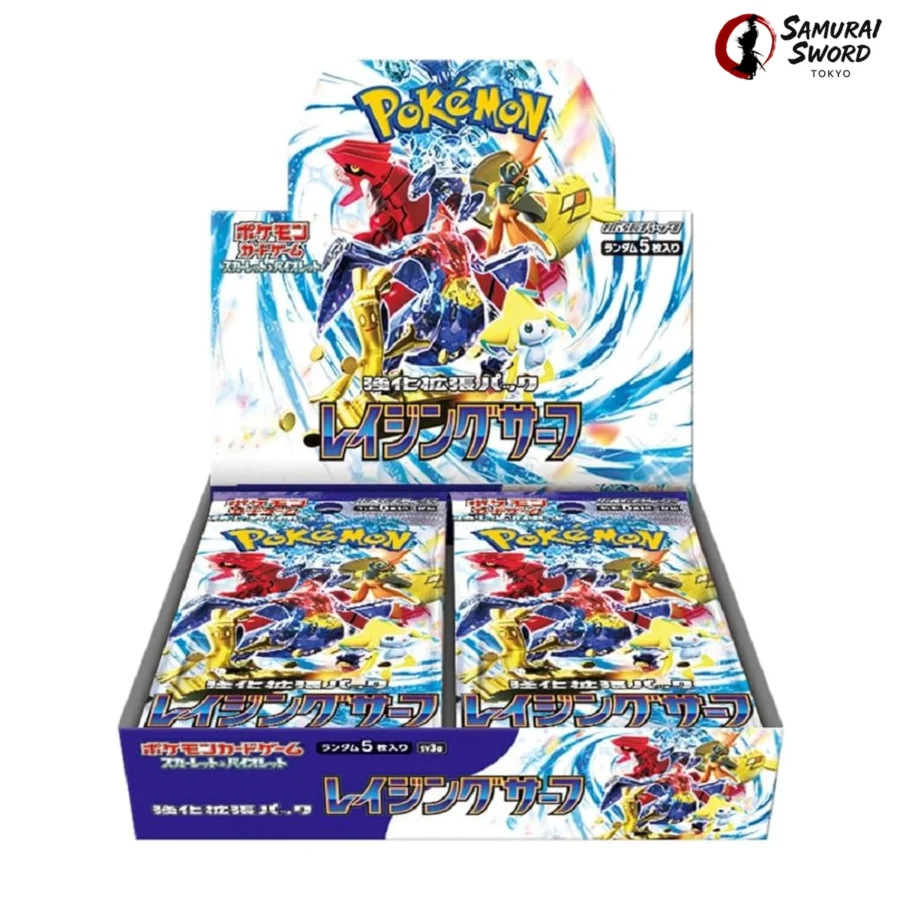
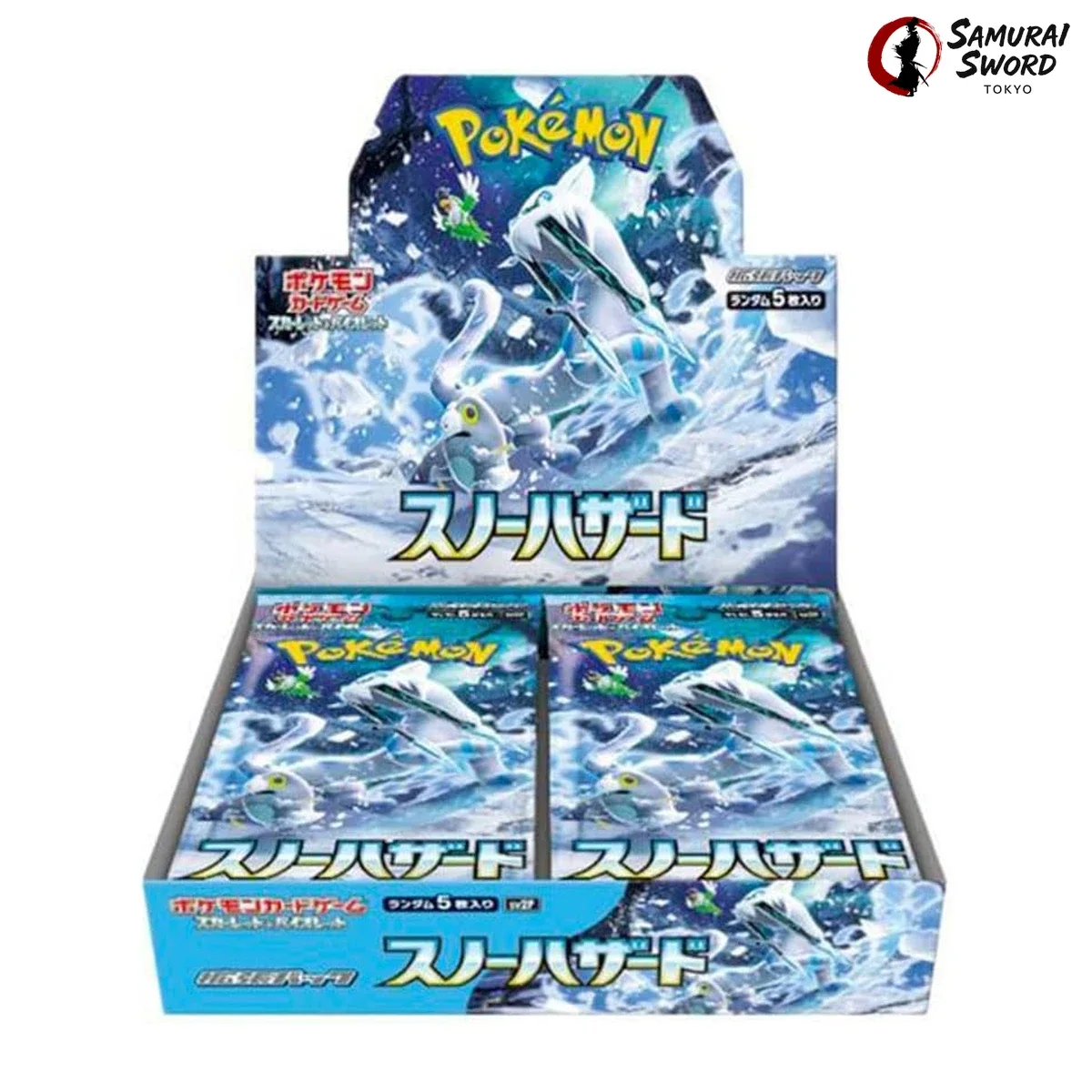
Specialty Japanese card shops offer the best balance of price, authenticity, and convenience for international buyers. Proxy services and eBay are alternatives, but authentication risk and fees vary significantly.
Introduction
Figuring out how to buy Japanese Pokemon cards from Japan is the first hurdle every international collector faces. Language barriers, shipping logistics, a 12.5% US tariff, and counterfeit risks create real hesitation — even though Japanese cards have become some of the most sought-after collectibles worldwide.
This guide breaks down five proven methods to buy Japanese Pokemon cards from Japan, compares the total landed cost of each, and walks you through shipping, import duties (including the 2026 US tariff changes after the Supreme Court ruling), and how to avoid fakes. By the end, you will know exactly which buying method fits your budget and comfort level.
Our team at Samurai Sword INC ships over 15,000 sealed booster boxes from Tokyo every month. Every box is inspected and serial-tracked — so the information in this guide comes from daily experience in the Japan-to-international Pokemon card supply chain.
Why Buy Japanese Pokemon Cards?
Japanese Pokemon cards trade at a 15–40% premium over their English counterparts — and for good reason. Three factors drive collectors toward the Japanese market.
Print Quality & Exclusive Art
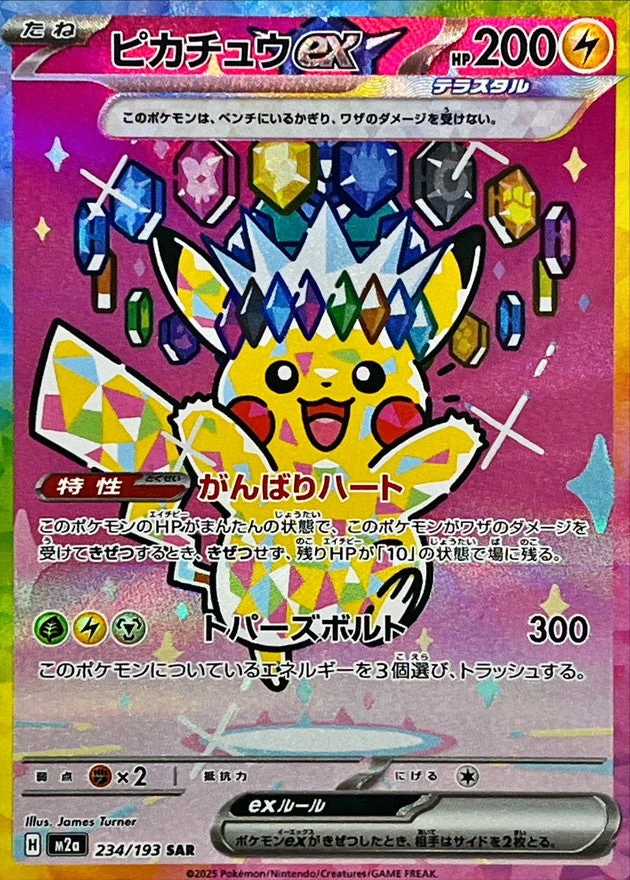
Japanese cards are manufactured at a dedicated facility with stricter quality control than international printings. The texture on full-art cards feels noticeably different: smoother holographic patterns, sharper color gradients, and more consistent centering. Exclusive rarities like Special Art Rare (SAR) and Master Ultra Rare (MUR) feature artwork that many collectors consider the pinnacle of Pokemon TCG design.
Earlier Release Dates
Japanese sets release 3–6 months before their international counterparts. Buying Japanese means you get access to new mechanics and chase cards months ahead of the English market.
Collector Value & PSA Grades
Japanese cards consistently achieve higher PSA 10 rates — community estimates suggest 15–20% for Japanese prints versus 8–12% for English. A PSA 10 slab can multiply a card’s value by 3–10x, making Japanese cards particularly attractive for grading.
For a full breakdown of the differences, see our Japanese vs English Pokemon Cards comparison.
5 Ways to Buy Japanese Pokemon Cards from Japan
Your best option depends on budget, effort, and how much you value authenticity guarantees. Here is a side-by-side comparison.
| Method | Cost Level | Speed | Ease | Safety | Best For |
|---|---|---|---|---|---|
| 1. Specialized Export Shops | $$ | Fast (3–7 days) | Easiest | Highest | Most buyers |
| 2. Proxy Services (Buyee, ZenMarket) | $–$$ | Moderate (7–14 days) | Moderate | Moderate | Bargain hunters |
| 3. eBay / Global Marketplaces | $$–$$$ | Varies | Easy | Low–Moderate | Convenience seekers |
| 4. Japanese Shops + Forwarding | $–$$ | Slow (10–21 days) | Hard | Moderate | Experienced buyers |
| 5. Buying in Person (Japan) | $ | Instant | Fun | High | Travelers |
Method 1 — Specialized Export Shops (Recommended)
Specialized export shops are the simplest way to buy Japanese Pokemon cards from Japan. These businesses handle sourcing, inspection, packaging, and international shipping — you browse an English-language site, pay, and wait for delivery.
How it works:
- Browse the shop’s catalog (all in English)
- Add items to cart and checkout (credit card, PayPal)
- Your order ships from Japan with full tracking
Why this is the top recommendation: Export shops inspect every box before shipping. At Samurai Sword INC, every booster box carries a serial number — if a resealed or tampered box is ever reported, we trace it to the source and permanently ban that supplier. This level of quality control does not exist on marketplaces or through proxy services.
Typical cost (1 BOX to US): Product price + $15–25 shipping. No proxy fees, no forwarding charges.
Best for: First-time buyers, collectors who value authenticity guarantees, and anyone who wants a simple English-language checkout.
Method 2 — Proxy Services (Buyee, ZenMarket, Neokyo)
Proxy services connect you to Japanese marketplaces — Yahoo! Auctions Japan, Mercari, Rakuten — through an English interface. You browse, bid, and buy without navigating Japanese sites yourself.
How it works with Buyee:
- Create a Buyee account (free, English interface)
- Search for Japanese Pokemon cards on Yahoo! Auctions or Mercari through Buyee
- Place your bid or buy — Buyee handles the Japanese-language transaction
- Items arrive at Buyee’s warehouse. Consolidate multiple purchases into one shipment
- Choose shipping method and Buyee forwards to your address
Proxy service fee comparison (2026):
| Service | Fee per Item | Free Storage | Key Feature |
|---|---|---|---|
| Buyee | ¥300 (~$2) | 30 days | PayPal, integrated marketplace browsing |
| ZenMarket | ¥300 (~$2) | 60 days | Multi-language support, deposit-based |
| Neokyo | ¥250 (~$1.70) + packing fee | 45 days | Cross-marketplace search (Mercari, Yahoo, Surugaya) |
| DEJAPAN | ¥0 (processing fee at ship) | 45 days | Zero per-item fee |
| Sendico | ¥300 (~$2) | 180 days | Longest free storage, content insurance |
Fees as of March 2026. Additional costs apply for international shipping, consolidation, and optional inspection services.
Typical cost (1 BOX to US): Product + proxy fee + ¥3,000–5,000 international shipping + import duty. Often comparable to or higher than Method 1, but proxy services give you access to out-of-print sets and auction deals.
Best for: Buyers hunting specific items, out-of-print sets, or auction-price deals on Yahoo! Auctions Japan.
Trade-off: Proxy services do not inspect products. You are buying from individual Japanese sellers, and the proxy forwards whatever arrives.
Method 3 — Global Marketplaces (eBay, Amazon)
eBay and Amazon are the most familiar platforms, but they come with a price premium.
How it works: Search for “Japanese Pokemon booster box” on eBay or Amazon, buy from a seller with solid reviews, and receive direct shipping.
Typical cost (1 BOX to US): Product price (often 20–40% above Japanese market price) + $10–30 shipping. Many sellers build import fees into the listing price.
Pros: Familiar checkout. Strong buyer protection (eBay Money Back Guarantee, Amazon A-to-Z).
Cons: Highest prices due to seller markup. Counterfeit and resealed box risk is the greatest among all methods.
Best for: Buyers who prioritize convenience and buyer protection over price.
Red flags to watch: Prices significantly below market, new seller accounts with no history, stock photos instead of actual product images, shipping from countries other than Japan.
Method 4 — Japanese Online Shops + Forwarding
Shopping directly on Amazon.co.jp, Rakuten, or Pokemon Center Japan Online requires a package forwarding service — most Japanese retailers do not ship internationally.
How it works:
- Sign up for a forwarding service (tenso.com, Blackship, Japan Rabbit)
- Receive a Japanese warehouse address
- Shop on Japanese sites using that address
- The forwarding service ships your package internationally
Typical cost (1 BOX to US): Product + ¥500–1,000 forwarding fee + ¥3,000–6,000 international shipping.
Best for: Experienced online shoppers comfortable navigating Japanese-language sites (Google Translate helps, but checkout flows can be tricky).
Note: Pokemon Center Japan Online uses a lottery system for popular products. Winning gives you retail pricing, but odds are low and the site is entirely in Japanese.
Method 5 — Buying in Person (If Visiting Japan)
A trip to Japan opens up the most hands-on shopping experience. Card shops are concentrated in major cities, and most stock current and out-of-print sets.
Where to go:
- Pokemon Center stores (Shibuya, Ikebukuro, Osaka) — official retail, lottery-based for popular BOX
- Nakano Broadway (Tokyo) — Mandarake and specialty card shops with singles and sealed product
- Akihabara (Tokyo) — Card Rush, Yellow Submarine, and dozens of small shops
- Convenience stores — 7-Eleven, Lawson, and FamilyMart sell booster packs (typically 2-pack limit per person)
Typical cost: Retail or shop pricing (no shipping or import duty). Savings depend on exchange rate and shop.
Best for: Travelers visiting Japan who want the full in-person experience. Bring an extra suitcase.
Total Cost Breakdown — What You’ll Actually Pay
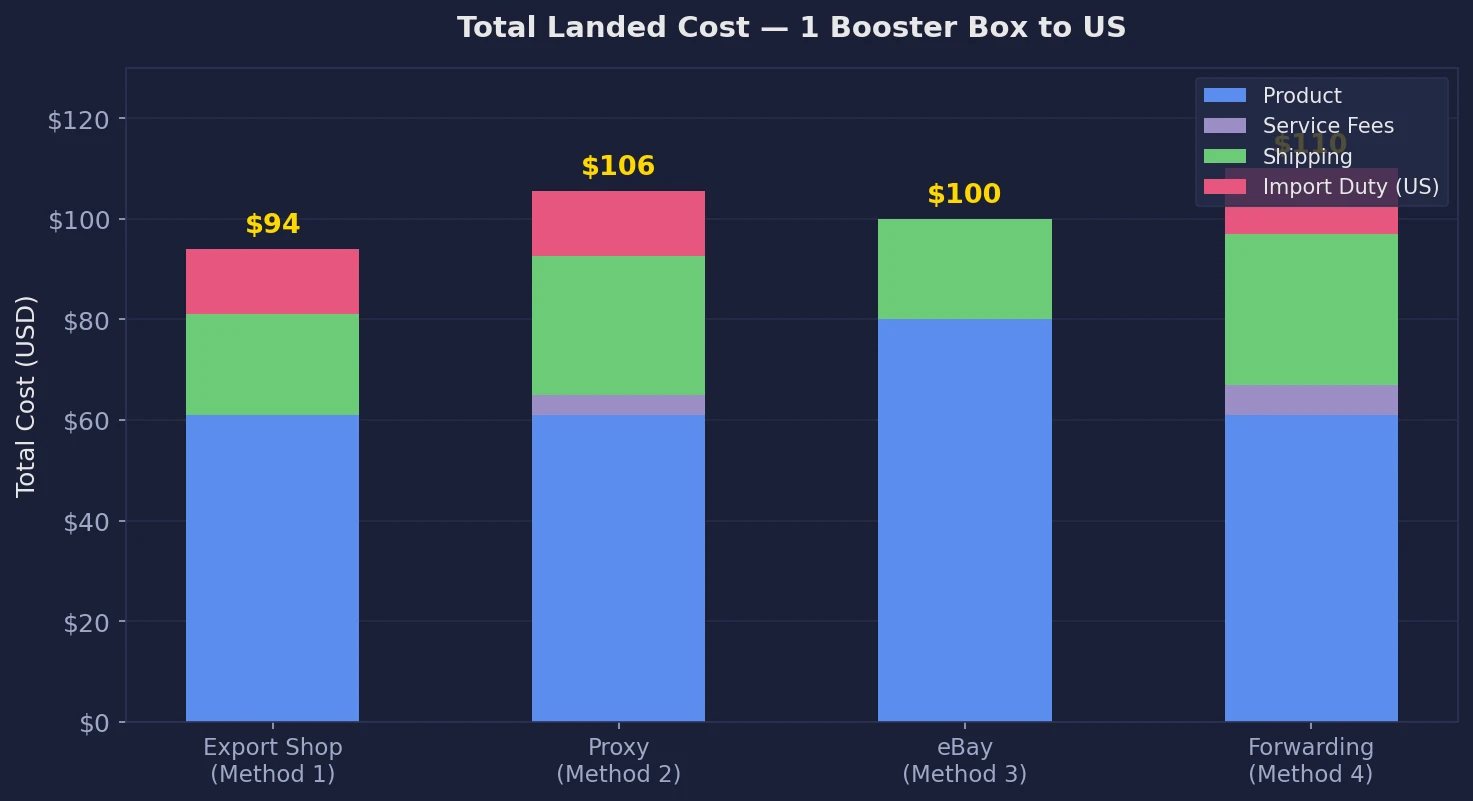
The sticker price on a Japanese booster box is just the starting point. Shipping, proxy fees, and import duties can add 30–70% to your final bill depending on your method and location.
Example: 1 Standard Booster Box (Market Price ~¥8,500 / ~$58)
| Cost Component | Method 1 (Export Shop) | Method 2 (Proxy) | Method 3 (eBay) | Method 4 (Forwarding) | Method 5 (In Person) |
|---|---|---|---|---|---|
| Product | ~$58 | ~$58 | ~$75–90 | ~$58 | ~$58 |
| Service Fee | Included | ~$2–5 | — | ~$5–7 | — |
| Shipping | $15–25 | $20–35 | $10–30 | $20–40 | — |
| Import Duty (US, 12.5%) | ~$7–10 | ~$7–10 | Often included | ~$7–10 | Duty-free* |
| Carrier Fee | $0 (DDP — prepaid) | ~$18 (DDU) | Often included | ~$18 (DDU) | — |
| Total (US) | ~$80–93 | ~$105–126 | ~$85–120 | ~$108–133 | ~$58 |
Prices as of March 2026. Secondary market prices. Exchange rate: approximately ¥147/USD.
*In-person purchases are duty-free for personal-use quantities under the US $800 personal exemption when returning from travel.
Specialized export shops (Method 1) typically deliver the lowest total landed cost for remote buyers because they ship in volume and avoid the layered fees that proxy and forwarding services add.
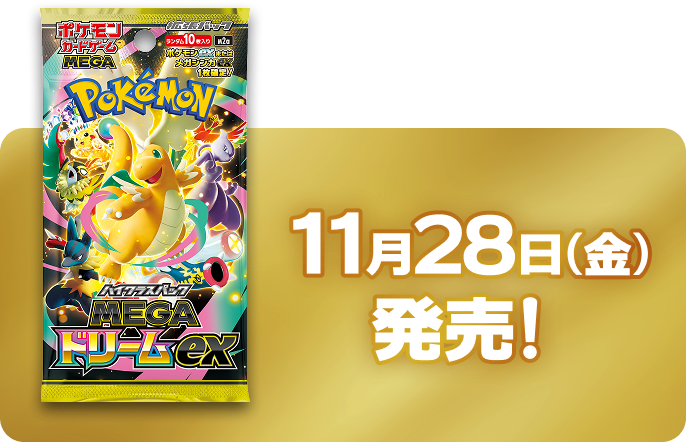
Price alert: Starting May 2026, Japanese booster pack MSRP increases from ¥180 to ¥200 per pack (¥5,400 to ¥6,000 per 30-pack box) due to rising material costs. Current-production boxes at the old price point represent the last window before the increase takes effect. (Source: PokeBeach)
Shipping & Delivery Guide
Most Japanese Pokemon card shipments reach international destinations within 3–14 business days, depending on carrier and service level.
Shipping Methods Compared
| Carrier | Delivery Time | Tracking | Insurance | Cost (1 BOX, ~500g) |
|---|---|---|---|---|
| DHL Express | 2–5 days | Full | Included | ¥3,500–5,000 (~$24–34) |
| FedEx | 2–5 days | Full | Included | ¥3,500–5,500 (~$24–37) |
| EMS (Japan Post) | 4–10 days | Full | Included | ¥3,150–4,400 (~$21–30) |
| ePacket | 7–21 days | Basic | Limited | ¥1,500–2,500 (~$10–17) |
| Surface Mail | 1–3 months | None | None | ¥1,000–1,500 (~$7–10) |
Shipping rates as of March 2026 (Japan Post rate schedule). Actual rates vary by destination zone and package dimensions.
Recommendation: For sealed booster boxes, DHL or FedEx provide the best balance of speed and protection. EMS is a solid mid-tier option. Avoid surface mail for valuable items.
2026 update: When you buy from us, we ship to the US DDP (Delivered Duty Paid): the 12.5% import duty and the small CBP processing fee are collected at checkout, and no carrier fee is billed at your door. Sellers who ship DDU instead leave the duty to be collected on delivery, plus the carrier’s disbursement fee (currently about $18).
Import Duties & Tariffs — 2026 Update
Import duties have changed significantly since 2025. Here is the current picture for major markets.
United States — 12.5% Tariff, Prepaid at Checkout
The US tariff landscape for Japanese imports went through four major changes:
- August 29, 2025: The de minimis exemption ($800 duty-free threshold) was eliminated. All packages from Japan became subject to tariff regardless of value.
- September 4, 2025: The US-Japan Framework Agreement locked in a 15% tariff on most Japanese imports, including trading cards (HS code 9504.40).
- February 20, 2026: The Supreme Court ruled that IEEPA-based tariffs exceeded presidential authority, ending the 15% rate. A temporary 10% surcharge under Section 122 applied from February 24 to July 23, 2026.
- July 24, 2026: A Section 301 action set the current rate: 12.5% for Japan-origin goods whose base US duty rate is free — including trading cards (HS 9504.40).
What you pay today (updated August 2026):
- Tariff: 12.5% on the product value (international shipping is not taxed)
- Carrier fee: none when you buy from us — we ship DDP and collect the duty at checkout; DDU shipments from other sellers incur the carrier’s disbursement fee (about $18) on delivery
- Typical duty on 1 BOX (~$58 value): approximately $7, prepaid at checkout with us — nothing to pay at your door
United Kingdom
- VAT: 20% on declared value + shipping cost
- Customs duty: Generally 0% for trading cards (HS code 9504)
- Carrier handling fee: £8–12
- Typical import cost on 1 BOX: approximately £12–18
Australia
- GST: 10% on goods valued over AUD $1,000
- Single-box orders (under AUD $1,000): No GST or customs duty — Australia remains the most import-friendly market for Pokemon card buyers
Canada
- Customs duty: 0% for trading cards
- GST/HST: 5–15% depending on province
- De minimis threshold: CAD $20 for duty, CAD $40 for tax
- Typical import cost on 1 BOX: approximately CAD $5–12
| Country | Tariff Rate | Tax | De Minimis | Typical Cost (1 BOX) |
|---|---|---|---|---|
| US | 12.5% | — | Eliminated | ~$7–10 (prepaid at checkout with us) |
| UK | 0% (cards) | VAT 20% | £135 | £12–18 |
| Australia | 0% | GST 10% | AUD $1,000 | A$0–6 |
| Canada | 0% | GST 5–15% | CAD $20–40 | C$5–12 |
Duty and tax information as of August 2026. Rates change — check your country’s customs authority for the latest figures.
How to Buy Safely — Avoiding Fakes & Scams
Buying from a trusted source with quality control eliminates nearly all risk. If you purchase from a reputable export shop with inspection procedures, the chance of receiving a counterfeit or resealed product is close to zero. Here is what to watch for if you buy through other channels.
Red Flags to Watch For
Fake cards: Look for blurred printing, incorrect card thickness, flat uniform blue on the back (authentic cards have subtle gradients), and inconsistent Japanese text spacing. The tactile feel of genuine holographic cards is distinctive and difficult to replicate.
Resealed boxes: Check that the shrink wrap has the Pokemon Company logo printed on it. Watch for visible tape residue, re-application marks on edges, irregular barcode placement, and prices suspiciously below market value.
Why Serial Tracking Matters
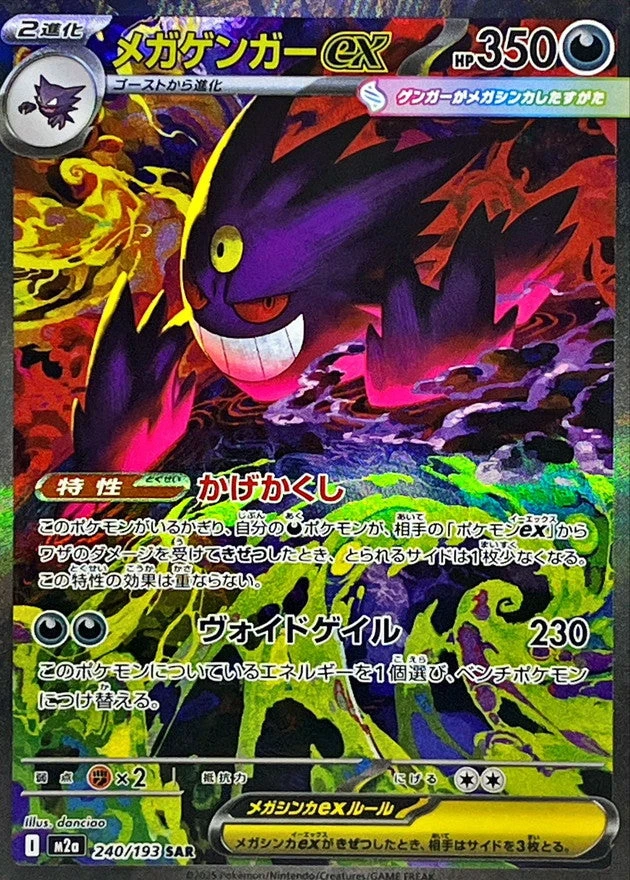
Shops that assign serial numbers to every box create a chain of accountability. If a tampered box is reported, the serial traces it back to the supplier — who gets permanently banned. This systemic approach to quality control is something marketplace sellers and proxy services cannot replicate.
For a complete authentication guide with visual examples, see our How to Spot Fake Japanese Pokemon Cards article.
What to Buy First — Best Japanese Sets for New Collectors
Three booster box categories stand out for new collectors in 2026.
For chase card collectors: The latest expansion packs — Battle Partners and Super Electric Breaker — feature stunning SAR and MUR artwork. Lillie’s Clefairy ex SAR from Battle Partners trades around ¥28,000 (~$190), and Pikachu ex SAR from Super Electric Breaker sits at approximately ¥66,500 (~$452).
For budget-friendly first purchases: Standard expansion booster boxes (30 packs) range from ¥7,000–12,000 (~$48–82) on the secondary market.
For long-term value: High Class Packs (released annually in December) have historically appreciated after going out of print. They feature curated card pools with elevated rarity rates.
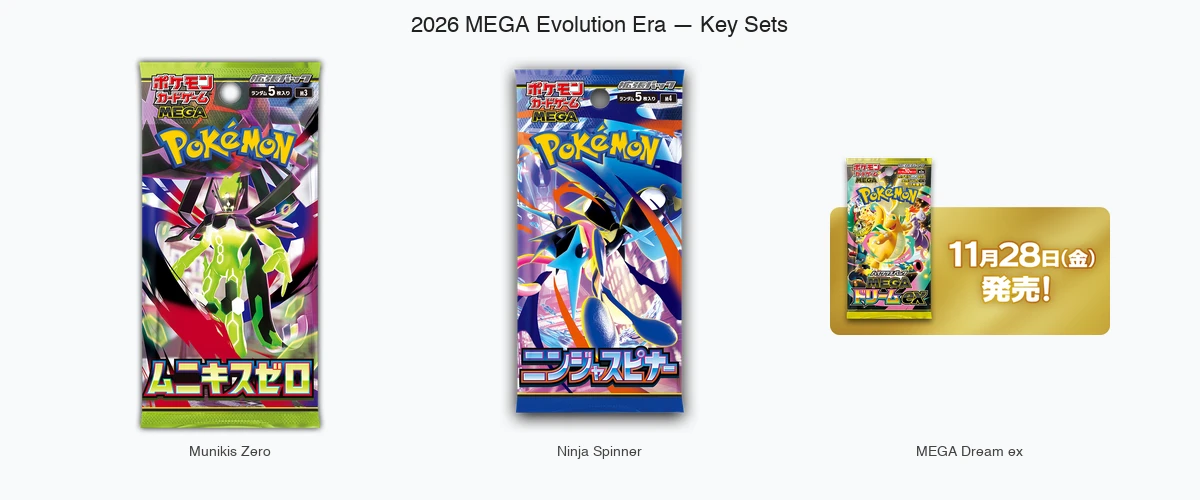
Timing note: Booster pack MSRP increases from ¥180 to ¥200 in May 2026. Boxes produced before this change are the last at the current price point.
For complete rankings, see our Best Japanese Pokemon Booster Boxes in 2026 guide and Best Sets for Beginners.
All orders ship from Japan with tracking and insurance. View shipping policy → | Customs & duties info →
Questions? Contact us → | Return policy →
FAQ
How can I buy Japanese Pokemon cards if I live in the US?
The easiest option is a specialized export shop like Samurai Sword INC that ships directly from Japan with tracking. You can also use proxy services like Buyee or ZenMarket to buy from Japanese marketplaces. Since August 2025 all US imports from Japan are subject to tariff regardless of value; the rate is 12.5% as of August 2026. When you buy from us the tariff is collected at checkout (DDP) with no carrier fee at your door — roughly $7 per booster box.
Is it cheaper to buy Pokemon cards from Japan?
Japanese booster boxes have an MSRP of ¥5,400 (~$37), but retail availability is extremely limited. Secondary market prices range from ¥7,000–15,000 (~$48–102) depending on the set. After adding shipping ($15–35) and import duties, the total cost is often comparable to buying from a US-based Japanese card retailer — but you gain access to wider selection and earlier releases. Starting May 2026, MSRP increases to ¥6,000 per box.
How much does it cost to ship Pokemon cards from Japan?
For a single booster box (~500g), expect approximately $10–17 for economy (ePacket), $21–30 for EMS, or $24–37 for express carriers (DHL/FedEx). Rates as of March 2026 based on Japan Post and carrier rate schedules.
Do I have to pay customs on Pokemon cards from Japan?
In most countries, yes. US buyers pay a 12.5% tariff (rate as of August 2026) on all imports since the de minimis exemption ended in August 2025; when you buy from us it is prepaid at checkout with no carrier fee. UK buyers pay 20% VAT plus £8–12 handling. Australian buyers generally pay nothing on single-box orders under AUD $1,000. Canadian buyers pay 5–15% GST/HST.
How do I spot fake Japanese Pokemon cards?
Check print sharpness (fakes look blurred), card texture (authentic holos feel distinctly smooth), card thickness (fakes feel wrong), back color gradients (fakes use flat uniform blue), and Japanese text spacing (fakes show inconsistencies). The safest approach is buying from sellers with serial-tracked inspection procedures. See our complete fake detection guide.
Can I use Japanese Pokemon cards in English tournaments?
Official Pokemon TCG rules require cards in the language of the event. Some tournaments allow Japanese cards if your entire deck uses the same language and you carry official English reference cards. Confirm with your local tournament organizer.
What is a proxy service and how does it work?
A proxy service like Buyee acts as a middleman — you browse Japanese marketplaces (Yahoo! Auctions, Mercari) through an English interface, and the proxy handles the purchase, receives items at a Japanese warehouse, and forwards them to your international address. You pay the product price plus a service fee (¥250–300 per item) plus international shipping.
Are Japanese Pokemon booster boxes ever resealed?
Resealing exists but is uncommon from legitimate sellers. Protect yourself by buying from shops that inspect and serial-track every box, verifying the shrink wrap shows the Pokemon Company logo, and avoiding suspiciously cheap listings. Export shops with quality control procedures offer the strongest protection.
Bottom Line
Buying Japanese Pokemon cards from Japan comes down to three decisions:
- Choose your method. Specialized export shops deliver the best combination of price, speed, and safety for most buyers. Proxy services like Buyee open up broader inventory — including out-of-print sets — but add complexity. Visiting Japan in person gives you the lowest cost and most hands-on experience.
- Budget for the full cost. Product price is just the start. Add shipping ($15–35), import duty (0–12.5% depending on your country), and any carrier fees to calculate your real total. For US buyers, a typical booster box lands at $80–95 all-in through an export shop.
- Prioritize authenticity. The cheapest option is rarely the safest. Serial-tracked boxes from established shops eliminate counterfeit and resealing risk entirely.
Your next step: browse the latest Japanese booster boxes and find a set that matches your collecting goals.
⚡ Shop Japanese Pokemon Booster Boxes
Authentic sealed products shipped directly from Tokyo, Japan with tracking & insurance via FedEx.
Picked for this article
📩 Get member-only sale alerts & coupons
Sale alerts, coupons and restock notices by email — straight from Tokyo.

![Super Electric Breaker (SV8) Pull Rates & Hit Rates — Best Cards & Box Value [2026]](https://samuraiswordtokyo.com/wp-content/uploads/blog-refresh/457/featured_1200x630_7d28b21a-be7a-4919-8190-f3944b75a801.webp)