Fake Japanese Pokemon cards turn up on flea-market apps and other resale platforms, and the Japanese Pokemon card back is one of the first places to compare a suspect card against a genuine one. SNKRDUNK reports that 59.3% of respondents to its November 2023 survey had bought a card on a flea-market app that turned out to be fake. The survey’s sample size, population and method are not published, and SNKRDUNK runs its own authentication service.
Pokemon’s official help center, Pokémon Support, says that counterfeit cards are often easy to see through if you hold them up to a bright light, and that the highest reported instances of counterfeit sales originate from flea markets (Pokémon Support, as of October 5, 2026).
No single tell is conclusive. SNKRDUNK says some fakes are precise enough to need a high-definition digital microscope, and that a fake front can be glued onto a genuine back. Compare the suspect card with a genuine card from the same set under the same light, run several tests rather than one, and check the cert number on PSA’s site for any graded card. The Japanese back is a good first comparison point: Play! Pokémon’s tournament handbook says Japanese card backs are different from the backs of all other Pokémon cards.
- Play! Pokémon’s tournament handbook states that Japanese card backs differ from the backs of all other Pokémon trading cards, and The Pokémon Company’s chronicle dates the card-back redesign to July 2001.
- The SNKRDUNK survey figure and the U.S. Attorney’s Office SDNY case are quoted as those sources print them.
- Box and slab checks are tied to SNKRDUNK, PSA and Pokémon Support, and the store product prices are as of October 5, 2026.
- USD figures convert at ¥154/USD, approximate.
30-Second Quick Authentication Check
Five checks, no tools, half a minute. SNKRDUNK lists five points that can be judged without a microscope: paper and colour, text and spelling, print resolution, card size, and relief or holo finish. The table puts the card back first as a comparison point and merges size with finish.
| # | Check | Genuine card | Fake card |
|---|---|---|---|
| 1 | Card back | Matches a genuine card of the same era side by side; the Japanese back is different from the backs of all other Pokémon cards | Rough print on the back, or a colour that looks off next to a genuine card |
| 2 | Paper and colour | A little thickness and firmness, a smooth glossy surface | Thinner and softer, or rough and gritty to the touch; a different colour tone |
| 3 | Text and spelling | Card and attack names match the official card database | Typos, odd spaces inside attack names, wrong character names |
| 4 | Print resolution | Sharp art and text, clear colour | Coarse print, blurry text, faint colour — visible by eye on many fakes |
| 5 | Size and finish | 63 mm x 88 mm, about 0.30 mm thick per SNKRDUNK; relief and holo finish present where the card has one | Cut slightly small or large; relief or holo finish missing or poor |
If a card fails even one of these checks, move on to the detailed tests below. A card that passes all five can still be fake: SNKRDUNK notes that some counterfeits cannot be told apart by eye and need a high-definition digital microscope.
Card Authentication — 10 Detailed Tests
Use several checks when inspecting a suspect Japanese Pokemon card, because each one catches a different kind of counterfeit. Each test carries a difficulty rating.
Japanese Pokemon Card Back: What the Real Back Looks Like
Test 1 — Difficulty: Easy
The Japanese Pokemon card back is the side most buyers never study, which is why it makes a useful comparison point. Play! Pokémon’s TCG Tournament Handbook (revision of September 1, 2026) states that Japanese cards are considered “marked” for tournament purposes “as their card backs are different than the card backs of all other Pokémon trading cards.” The same handbook adds that mixed language decks are allowed so long as the backs are consistent. It does not describe how the backs differ.
The design also has a date. The Pokémon Company’s own chronicle lists the card-back redesign in July 2001. The full history, including the old “Pocket Monsters Card Game” back, is covered in when the Japanese back changed in July 2001, and Pokemon card backs by era sets the old back and the current back side by side.
In practice, the useful comparison is against a real card. SNKRDUNK reports that some counterfeits show a rough print on the artwork or the back, and that others differ in colour from a genuine card, but that the colour difference is hard to notice without a genuine card to compare. Place the suspect card next to one you know is genuine from the same era, under the same light, and look at the back first and the front second.
A fake front glued onto a genuine back is one of the counterfeit types SNKRDUNK lists. Because the back is real, the front and back feel different when touched. A convincing back therefore does not prove that a card is genuine; it is one test of ten.

2. Print Quality and Resolution
Difficulty: Easy
Hold the card at arm’s length, then close up, and look at the artwork and text. SNKRDUNK says some fakes are printed coarsely enough to see by eye: colour that looks faint or unclear is more likely to be fake, and the artwork, the back and the lettering can all look rough or blurry. PSA’s 2025 Fraud Report gives the likely reason, noting that counterfeits often appear blurry under magnification because they originate from scans rather than original print files. Typical signs:
- Fuzzy or pixelated artwork, especially along character outlines
- Text that looks blurred or soft next to a genuine card
- Colour that looks thin or faint compared with the original
- A rough print on the back as well as the front
A phone camera zoomed in on the lettering is a simple stand-in for a loupe. For text, compare the lettering against the official card image.

3. Texture and Paper Feel
Difficulty: Easy
SNKRDUNK describes a genuine card as having a little thickness and firmness, with a smooth, glossy surface. Some fakes are thinner and softer, and others have a rough, gritty surface that is easy to notice by touch. The gloss difference can be hard to see in photographs, which is why a seller’s photos alone are weak evidence. Fakes may feel:
- Thinner or softer than a genuine card
- Rough or gritty on the surface
- Different in finish from the other cards of the same set
Touch is a comparison test, not an absolute one. The reference is always a genuine card in your hand.
4. Holographic and Relief Details
Difficulty: Medium
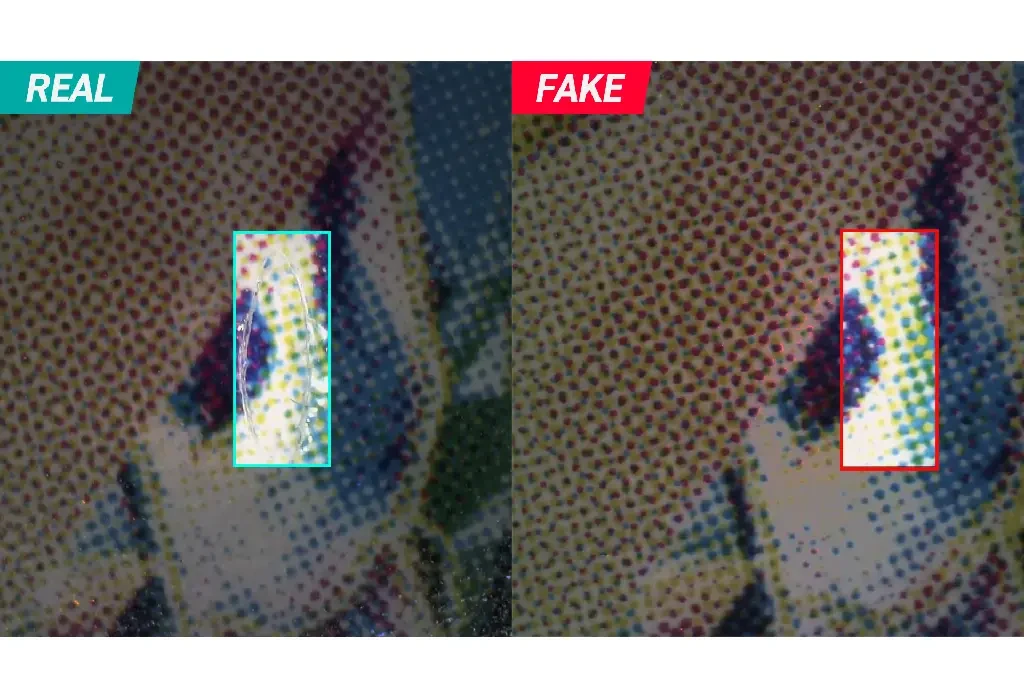
Cards with a relief or holo finish get special processing: raised relief that gives a three-dimensional feel, and holographic finishes that change colour with the light. SNKRDUNK reports that fakes may lack this processing or reproduce it poorly. PSA’s fraud report makes the same point about foil, noting that authentic foil uses specific layering and reflectivity patterns.
- Relief: run a fingertip across the surface and compare it with a genuine card of the same print. SNKRDUNK shows relief that is clearly defined on the real card and weaker on the fake.
- Holo: tilt the card under a bright light and watch the reflection. An unnatural or generic reflection that does not match a genuine copy of the same card is a warning sign.
5. Card Dimensions and Thickness
Difficulty: Easy
SNKRDUNK gives the genuine card size as 63 mm x 88 mm with a thickness of about 0.30 mm, and says some fakes are cut slightly small or large. Neither the Play! Pokémon handbooks nor pokemon-card.com print a card size, so these figures come from SNKRDUNK; Dragon Shield, a sleeve maker, prints 63 x 88 mm as the upper size for its standard sleeve category. A caliper makes the check precise. For sleeve and holder sizes, see the card size and dimensions comparison.
6. Font and Text Accuracy
Difficulty: Medium
Search the card in the official Pokemon Card Database and compare the name, attack text and numbers with the card in your hand. PSA’s report lists font discrepancies among its counterfeit signs, noting that fonts, especially in Pokémon, are distinct and difficult to replicate accurately. Compare:
- The typeface and weight of the card name, HP and attack text
- Spacing inside attack names and between lines
- Set symbols, rarity marks and the card number against the database entry
7. The Light Test
Difficulty: Easy
Pokémon Support states that counterfeit cards are often easy to see through if you hold them up to a bright light, and calls this a good way to identify a fake. A phone flashlight held behind the card is enough. Treat the result as one signal: a card that blocks light is not proven genuine, because SNKRDUNK notes that the most precise fakes pass casual checks and need a microscope.
8. Edge and Corner Quality
Difficulty: Easy
Look at the card edges from the side and the corners from above, next to a genuine card. PSA’s fraud report lists paper stock and layering among its counterfeit signs, noting that fiber structure and lamination layers differ. SNKRDUNK adds that some fakes are not cut to the correct size, which shows up as an edge or corner that does not line up with a genuine card laid on top.
9. Spelling Errors and Official Error Cards
Difficulty: Easy
SNKRDUNK reports that low-quality fakes carry misspelled card or attack names, odd gaps inside attack names, or wrong character names. It also warns that some misprints are real: it cites the official error card かいりきリザードン (Charizard), where the place that should read “かえんポケモン” reads “かいりきポケモン”. Before treating a typo as proof of a fake, search the card name to see whether it is a known official error.
10. A Front and Back That Feel Different
Difficulty: Medium
A card assembled from a fake front glued onto a genuine back is built to pass a back-only check. Rub both sides between your fingers: SNKRDUNK says the front and back have a different texture in this case. The Pokémon Company also issued a notice on September 19, 2023 about unlicensed items traded as “replica” or “metal card” products, saying it is working with sales platforms on stopping sales and pursuing legal measures (pokemon-card.com notice). For gold and metal novelty cards in particular, see real gold cards versus metal fakes.
How to Spot a Resealed Booster Box
A resealed box is an opened box in new shrink wrap. SNKRDUNK’s booster box legit-check article (February 11, 2025) lists what to look at, and notes that a box with packs removed or replaced is one that has been tampered with beforehand.
Shrink Wrap Inspection
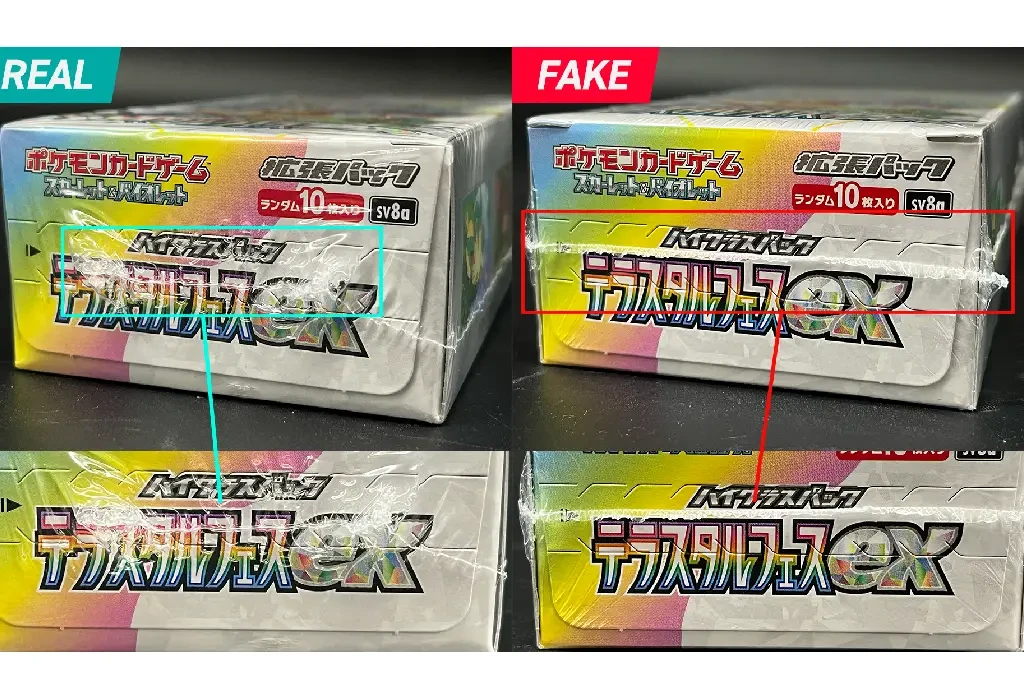
SNKRDUNK describes the wrap on a genuine Pokémon booster box as follows:
| Feature | Genuine box (per SNKRDUNK) | Red flag |
|---|---|---|
| Surface | Tight around the box, feeling similar to cling wrap | Loose or baggy wrap |
| Pressed protrusions | Where layers are pressed together, the protrusions take a T-shape | Protrusions that are not T-shaped |
| Shrink lines | Smooth, with no folds or creases, bunched around the middle of the top and bottom covers | Folds or creases, or lines running across the covers |
| Air holes | Several small holes of varying size and shape that let air out | No air holes found when the wrap is checked under a microscope |
| Logo | A white logo of The Pokémon Company on the wrap | No logo on the wrap |
SNKRDUNK treats the air holes as something a genuine wrap must have, but they are exceptionally small. Its advice for an uncertain box is to ask the seller for a microscope photo of the holes.
Our Product Condition Guide defines a sealed box as a product whose manufacturer shrink wrap or factory seal remains intact as shipped by the manufacturer, and lists minor wrinkles, air bubbles or looseness in the shrink wrap among things that are not defects. Judge wrap together with the other signs, not on its own.
Box Condition Clues
The inside of a box and the printing on it add more clues:
- Pack arrangement: SNKRDUNK says all packs in a genuine box are organised neatly, right-side up and forward-facing. Packs arranged haphazardly are a red flag that the box is fake or has been tampered with.
- X-ray: SNKRDUNK suggests asking a seller for an X-ray of the box, which can show whether the right number of packs is present or whether packs have been removed or replaced.
- Artwork and writing: SNKRDUNK says box artwork and writing do not vary between genuine boxes, so any discrepancy is evidence of a fake. Common problems on fake boxes are incorrect fonts, incorrect set descriptions and typos.
Artwork, Text and Seller Questions
An online image search of the box artwork, compared against the official product image, is the simplest check, as SNKRDUNK notes. Then ask the seller the questions that a genuine seller can answer quickly: a clear photo of every side, a microscope photo of the air holes, and an X-ray image for a high-value box. Evasive answers are a reason to walk away.
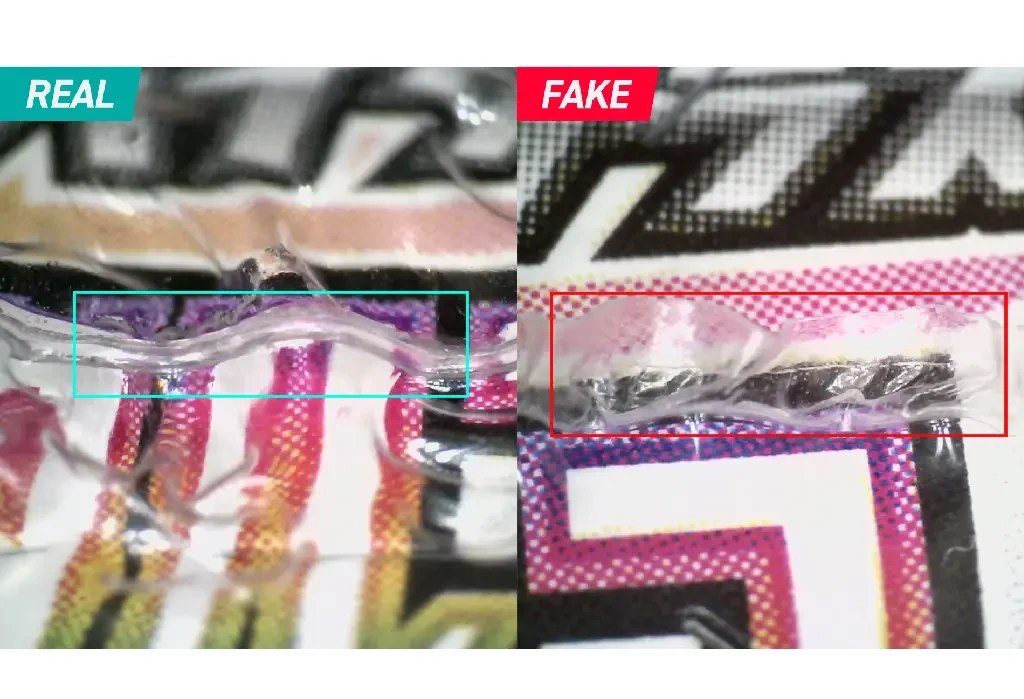
The air holes in genuine wrap are so small that SNKRDUNK says a microscope is needed to detect them. A seller who claims to have confirmed them with the naked eye has not confirmed anything; ask for the microscope photo.
Fake PSA Slabs — A Growing Threat
Counterfeit PSA-graded cards are a documented problem. PSA’s 2025 Fraud Report reports a 125% year-over-year increase in counterfeit Pokémon cards and names Pokémon the most counterfeited category (PSA 2025 Fraud Report). The report prints no split between Japanese and English cards.
In January 2026, a federal jury in New York found a defendant guilty of conspiracy to commit wire fraud and wire fraud for selling sports and Pokémon cards with fake grades purportedly issued by PSA. According to the U.S. Attorney’s Office for the Southern District of New York (January 29, 2026), the method was cleaning the grade and serial numbers off real PSA labels and printing fake 9 or 10 grades and new numbers on them. The release does not name Japanese cards.
How to Verify a PSA Slab
- Check the cert number: Enter the certification number on PSA’s official verification page and confirm that the result matches the card in front of you. PSA warns that verification does not eliminate risk: criminals do attempt to counterfeit PSA grading inserts using actual certification numbers derived from public sources, so a matching number is a check, not a conclusion.
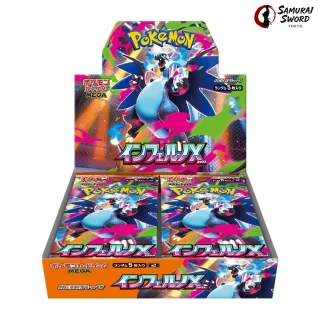
- Inspect the label: SNKRDUNK shows a copied label on which the “PSA” logo can be seen with the naked eye, and recommends checking that the label is not a copy. PSA’s security guidance describes a label light test in which you should be able to see through the label enough to read the text on the other side.
- Check the case: PSA describes its holder as tamper-evident because of the sonic weld. SNKRDUNK lists the case checks: no cracks or damage, no oddness in weight or size, and a label that is not a copy.
For the full slab checklist see how to tell if a PSA slab is fake, and for what the fraud report confirms see fake Pokemon cards and PSA’s 2025 Fraud Report. Our Product Condition Guide states that the certification number on each slab can be verified on PSA’s official website, and our PSA 10 card list shows the graded singles on offer.
Over $2 million — the amount prosecutors said the defendants attempted to deprive victims of through their sales and attempted sales of cards with forged PSA grades (U.S. Attorney’s Office SDNY, January 29, 2026). Verify cert numbers at psacard.com/cert before buying a graded card.
Are Japanese Pokemon Cards Less Likely to Be Fake? What the Sources Say
No source says so. PSA’s 2025 Fraud Report prints no split between Japanese and English counterfeits, and the sources that do exist describe where fakes are bought rather than which language is safer:
- SNKRDUNK’s November 2023 survey found that 59.3% of respondents had bought a card on a flea-market app that turned out to be fake (sample size not published).
- The Pokémon Company’s Japanese tournament floor rules state that forged cards, including reproductions and handmade substitutes, cannot be used in any tournament.
- The Pokémon Company’s September 19, 2023 notice warns of unlicensed “replica” and “metal card” items offered through online platforms and stores.
Pokémon Support adds that the highest reported instances of counterfeit sales originate from flea markets, and that a pack priced dramatically below the suggested retail price is a near certain warning of counterfeit merchandise. The pattern across the sources is about where a card was bought rather than which language it is printed in: flea markets and flea-market apps are where the reports these sources cite come from, and a price far below suggested retail is the clearest warning Pokémon Support names.
The Pokemon card list shows the Japanese sets we sell, and our storage guide for Japanese cards and PSA slabs covers keeping genuine cards in good condition once you have them.
Where to Buy Japanese Pokemon Cards Safely
The seller matters as much as any individual test, because a test only helps when you have the card in your hands. Pokémon Support suggests that buyers who suspect counterfeits look for shops in their area that specialise in trading cards and can evaluate cards for them.
What to Look for in a Trusted Seller
SNKRDUNK’s advice for flea-market purchases supplies the first four points of this checklist; the last one is our own:
- Transaction history: reliable sellers usually have several past transactions, often in the same title as the card they are selling
- Ratings: many high ratings suggest careful dealing; many low ratings or complaints are a warning, and a brand-new account with no listings is hard to judge
- Price: a price far below the going rate is a warning, and a seller can be asked for the PSA cert number before purchase
- Communication: sellers of fakes often do not reply to questions in the comments or messages
- Written policies: read the shipping, return and condition pages before buying, as the store’s own wording governs what is covered
How We Pack and Ship from Tokyo
The policy pages of Samurai Sword Tokyo state that all items are carefully inspected and securely packed before dispatch (Return and Refund Policy), and that orders ship from Japan by FedEx International Connect Plus or FedEx International Priority with a tracking number (Shipping Policy). Duties and taxes are explained on the customs and import taxes page, and customer reviews are on the reviews page.
These Japanese sealed boxes are listed as of October 5, 2026:
- M6 Storm Emeralda box (Sealed) ¥10,544 (~$68)
- M2 Inferno X box (Sealed) ¥16,728 (~$109)
- S12a VSTAR Universe box ¥25,335 (~$165)
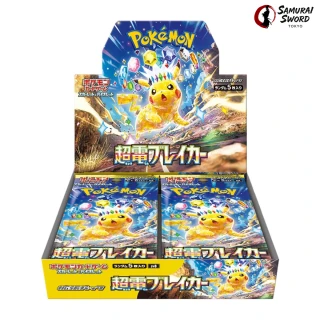
- SV8 Super Electric Breaker box (Sealed) ¥27,355 (~$178)
- SV2a Pokemon 151 box (Sealed) ¥44,961 (~$292) (update: currently sold out — restock requests via Quick Order)
Sourcing requests for a specific card go through Quick Order, and questions about a particular order or product can be sent through the contact page.
For deeper coverage on buying Japanese Pokemon cards, read how to buy Japanese Pokemon cards from Japan, the best Japanese booster boxes in 2026 ranking, the Japanese vs English Pokemon cards comparison, the best Japanese Pokemon card shops directory, the Pokemon TCG Pocket to real Japanese cards transition guide, and the Yu-Gi-Oh counterpart, how to spot fake Yu-Gi-Oh cards.
What to Do If You Receive a Fake
All orders ship from Japan with a FedEx tracking number. View shipping policy → | Customs & duties info →
Questions? Contact us → | Return policy →
Act quickly — the sooner the problem is documented, the clearer the case.
- Document everything: Photograph the card (front, back, edges) and the packaging under good lighting. Include close-ups of any suspicious details and the label of any graded slab.
- Contact the seller: Describe the problem in writing and attach the photos. If the seller becomes evasive or unresponsive, escalate.
- File a dispute: On platforms such as eBay, Mercari or PayPal, open a buyer protection case with your photo evidence.
- Report the listing: Flag the seller’s listing on the platform to protect other buyers.
- Keep the evidence: Do not destroy the card or discard packaging until the dispute is fully resolved, because you may need to return the item or provide more evidence.
For graded cards, check the cert number on PSA’s site first. If you suspect a slab is forged, PSA’s own pages explain how to verify certification numbers, and the guides to fake PSA slabs and PSA’s fraud report list what to document.
Frequently Asked Questions
How can you tell if Japanese Pokemon cards are fake?
Run several checks, not one. Compare the card back and front with a genuine card of the same era, then check paper feel, print sharpness, spelling against the official card database, size and relief or holo finish. Hold the card to a bright light. SNKRDUNK warns the most precise fakes need a microscope, so buy from reliable sellers.
Are Japanese Pokemon cards counterfeited too?
Yes. PSA’s 2025 Fraud Report names Pokémon the most counterfeited category and prints no split between Japanese and English cards. SNKRDUNK’s November 2023 survey found 59.3% of respondents had bought a fake card on a flea-market app. No source shows Japanese cards are less likely to be fake.
What does the back of a real Japanese Pokemon card look like?
Play! Pokémon’s tournament handbook says Japanese card backs are different from the backs of all other Pokémon cards, but it does not describe how. The back design changed in July 2001, per The Pokémon Company’s chronicle. Compare a suspect card’s back side by side with a genuine card of the same era.
Is the Japanese Pokemon card back the same as the English back?
No. Play! Pokémon’s TCG Tournament Handbook, revised September 1, 2026, says Japanese cards are considered marked because their card backs are different from the backs of all other Pokémon trading cards. It adds that mixed language decks are allowed if the backs are consistent. It does not say how they differ.
How do you do the light test on Pokemon cards?
Hold the card up to a bright light, such as a phone flashlight. Pokémon Support says counterfeit cards are often easy to see through when held to a bright light, so this is a good way to identify a fake. A card that blocks the light is not proven genuine, so combine it with other checks.
Can fake Pokemon cards pass PSA grading?
Counterfeit PSA slabs are the more documented problem. PSA warns that cert verification does not eliminate risk, because criminals have used real certification numbers on forged inserts. In January 2026 a federal jury convicted a defendant of selling cards with fake PSA grades. Check the cert at psacard.com/cert and inspect the label and case.
How can I tell if a Japanese booster box has been resealed?
SNKRDUNK says genuine wrap is tight like cling wrap, with T-shaped protrusions, smooth shrink lines bunched at the middle of the top and bottom, and a white Pokémon Company logo. Packs should sit neatly right-side up. Air holes need a microscope, so ask the seller for a microscope photo or an X-ray.
Where should I buy Japanese Pokemon cards online?
Choose a seller with a long transaction history, good ratings, prices near the going rate and written shipping, return and condition policies. Pokémon Support notes the highest reported counterfeit sales originate from flea markets and suggests specialist trading card shops can evaluate cards. Read the policy pages before ordering, and ask for cert numbers on graded cards.
What should I do if I receive a fake Japanese Pokemon card?
Photograph the card front, back and edges with the packaging, contact the seller in writing with the photos, and open a buyer protection case on eBay, Mercari or PayPal if the seller does not respond. Flag the listing, and keep the card and packaging until the dispute is fully resolved, in case you must return them.
Bottom Line
Three things to remember about fake Japanese Pokemon cards:
- Compare against a genuine card. The Japanese back is different from the backs of all other Pokémon cards, so a side-by-side comparison with a real Japanese card of the same era beats any description of a tell. A good back alone does not prove a card, since a fake front can be glued onto a genuine back.
- Sealed boxes need physical inspection. Wrap tension, T-shaped protrusions, the printed logo, pack arrangement and a microscope look at the air holes are SNKRDUNK’s checks for a resealed or fake box.
- Verify what can be verified. Cert numbers can be checked on PSA’s site, card names against the official database, and a seller’s history and policies before you pay.
Picked for this article
📩 Get member-only sale alerts & coupons
Sale alerts, coupons and restock notices by email — straight from Tokyo.

![Super Electric Breaker (SV8) Pull Rates & Hit Rates — Best Cards & Box Value [2026]](https://samuraiswordtokyo.com/wp-content/uploads/blog-refresh/457/featured_1200x630_7d28b21a-be7a-4919-8190-f3944b75a801.webp)