![Japanese Pokemon Distributor Guide: Wholesale from Tokyo [2026]](https://samuraiswordtokyo.com/wp-content/uploads/2026/08/featured-japanese-pokemon-card-distributor-guide-1-1024x538.webp)

Every week, shop owners type some version of the same search: “japanese pokemon distributor”, “pokemon card distributor”, “how to become a pokemon distributor”. The intent behind all of them is identical — I want to stock Japanese Pokemon product, and I want to buy it from whoever sits closest to the source. That is a completely reasonable goal. The problem is that the word “distributor” points at a door that, for Japanese-version product, is not the door overseas shops actually walk through.
Here is the honest version up front: official distribution of Japanese-version Pokemon product serves Japanese domestic retail. In practice, overseas shops that stock Japanese boxes overwhelmingly source them through Japanese exporters, retailers, marketplaces, and auction or buyback channels — not through an official international wholesale program. That is not a workaround or a gray market; it is simply how the supply chain for Japanese-version product works from outside Japan.
SAMURAI SWORD CO.,LTD. is a Tokyo-based exporter itself, and its own terms for shops are labelled as such under How We Work With Shops. Everything else is the structural picture we would want if we were on the buying side.
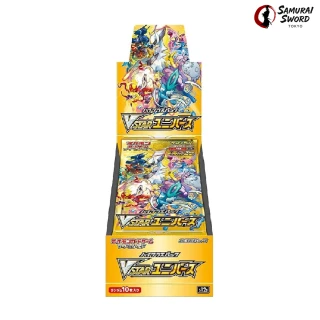
You almost certainly do not need a “distributor” — you need a reliable Japanese supplier. Official distribution of Japanese-version Pokemon product is a domestic retail matter inside Japan. The realistic sourcing path for an overseas shop is a standing relationship with a Japanese exporter-retailer (supplemented by marketplaces and auctions where they make sense), judged on allocation access for new sets, consistent condition standards, tracked shipping, and real recourse when something goes wrong. At Samurai Sword, prices are wholesale and orders start from one item, for example the S12A VSTAR Universe box at ¥25,335 (~$165).
- The buying section is rewritten from Samurai Sword’s live pages: wholesale prices, no minimum order, a VIP desk, payment methods and duty terms.
- The source-price table uses prices currently listed as of October 6, 2026, with linked boxes and the buyable option named.
- The OP-17 price comparison is stated as released, per the official Japanese and English One Piece Card Game pages. The October 6, 2026 update covers our store listings and prices only; the other facts in this article were last checked on October 1, 2026.
What People Mean by “Japanese Pokemon Distributor” — and What Actually Exists
In the English-speaking hobby trade, “distributor” has a specific meaning: an authorized wholesale company between the publisher and retail stores, selling at wholesale terms, typically requiring a business account, a resale certificate, and minimum commitments. For English-version product in various regions, structures like that exist, and applying for a wholesale account with a regional distributor is a well-trodden path for a game store.
The search for a japanese pokemon distributor assumes the same structure exists for Japanese-version product with an international-facing door. In practice, it does not work that way. The official distribution network for Japanese-version Pokemon cards serves Japanese domestic retail — the card shops, hobby chains, convenience stores, and mass retailers inside Japan. It is built to move product to Japanese shelves, in Japanese, under Japanese release schedules and allocation systems.
So when an overseas shop asks “who is the Pokemon card distributor for Japanese product in my country?”, the honest answer is usually: there typically is not one in the sense you mean. What exists instead is a layer of Japanese businesses — exporters, retailers with international storefronts, marketplace sellers, and auction/buyback houses — that buy within the Japanese domestic market and sell outward. That layer is how the overseas shops we ship to, and in practice the market at large, actually get Japanese sealed product.
This distinction changes what you should optimize for. Hunting for an official wholesale application form burns months on doors that do not lead where you want. Treating the task as building a reliable Japanese supplier relationship puts the work on the problem that actually determines your margins, your condition quality, and whether you get stock on release week.
Why “How to Become a Pokemon Distributor” Is the Wrong Question for Japanese Product
The search “how to become a pokemon distributor” gets asked with two different goals behind it, and it is worth splitting them apart.
Goal 1: “I want official wholesale terms on Japanese product”
For Japanese-version product, this door generally is not there. Official distribution of Japanese product is a domestic retail matter inside Japan — not an application an overseas shop fills out. Chasing it ends in a dead end, or worse, an intermediary presenting itself as more official than it is; the warning signs are listed under Red Flags and a Vetting Checklist.
Goal 2: “I want dependable supply at prices that leave me margin”
This is the real goal, and it is achievable without any official status — because buying at the Japanese source removes the re-export middlemen that stack up when Japanese boxes bounce through two or three countries before reaching your shelf. The full economics — MSRP structure, exchange rates, reprint culture — are in our companion piece on why Japanese Pokemon cards are cheaper, but the practical summary is: the margin you were hoping a distributor account would unlock is decided by the price at the Japanese source and by what your customers will pay for Japanese product.
One concrete anchor from a different game line shows how Japanese and English list prices are set separately, because it is the same product in two languages. Per the official One Piece Card Game sites, the Japanese OP-17 booster released on August 22, 2026 at ¥240 per pack tax included, with 6 cards per pack, while the English OP-17 released on August 28, 2026 with a $4.99 per-pack MSRP. Pokemon’s line pricing has its own structure, so treat this as an illustration rather than a universal ratio. (Full comparison in our Japanese vs English OP-17 breakdown.)
So reframe the project. The question is not “how do I become a pokemon distributor” — it is “which Japanese supplier will reliably sell me boxes at Japanese street prices, in the condition my customers expect, with shipping and payment I can trust?”
The Real Supplier Landscape: Three Channels Compared
Overseas shops sourcing Japanese Pokemon product work with some mix of three channel types. Each has a legitimate role; the mistakes come from using the wrong channel for the wrong job.
| Channel | Strengths | Weaknesses | Best used for |
|---|---|---|---|
| Japanese exporter-retailers (English-language storefronts shipping internationally) | Repeatable ordering, consistent condition standards, English support, tracked international shipping, a counterparty you can build history with | Prices are retail-source, not domestic-wholesale; allocation on hyped new sets can be limited for first-time buyers | Core recurring supply — the backbone of a shop’s Japanese sourcing |
| Marketplaces (Japanese sellers on international platforms, proxy-buying services) | Wide selection, price discovery, easy small test orders | Seller quality varies order to order; condition standards inconsistent; recourse depends on the platform; per-order shipping adds up | Filling gaps, testing demand on a set before committing volume |
| Auctions and buyback channels (Japanese auction platforms, usually via proxy services) | Occasional below-street pricing; access to older and out-of-print sealed product | No condition guarantee beyond photos; authenticity risk on older product is on you; proxy fees and slow consolidation; zero relationship value | Opportunistic buys and back-catalog hunting by experienced buyers |
The pattern experienced shop buyers converge on is a hub-and-spoke: one or two exporter-retailer relationships as the hub for recurring volume, with marketplaces and auctions as spokes. Running a shop entirely off auction sniping usually ends with the hours spent, the misgraded conditions, and the occasional fake on older product eating the price advantage — on that last risk, read our guide to spotting fake Japanese Pokemon cards before any auction-channel buying.
If you are earlier in the process and still learning how ordering from Japan works mechanically — customs, shipping tiers, payment methods — start with the wholesale-specific walkthrough in how to buy Japanese Pokemon cards wholesale, which covers the order flow in operational detail. Shops that also stock singles, bulk and graded product can read Japanese TCG wholesale for card shops.
What Japanese Source Prices Actually Look Like
Abstract talk about “buying at the source” is less useful than real numbers, so here are the prices currently listed on our own shelf as of October 6, 2026. They move with the market, so treat the table as a dated snapshot. USD figures convert at ¥154/USD, approximate.
| Japanese booster box | Store price, October 6, 2026 | Option or note |
|---|---|---|
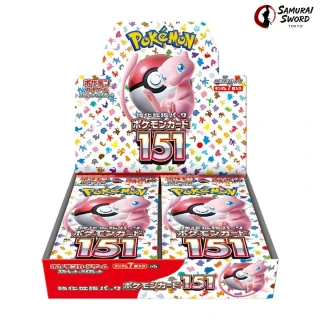
| SV2A Pokemon 151 | ¥44,961 (~$292) | Sealed option; the No Shrink option is sold out at the time of this update. See the SV2A card list |
| S12A VSTAR Universe | ¥25,335 (~$165) | See the S12A card list |
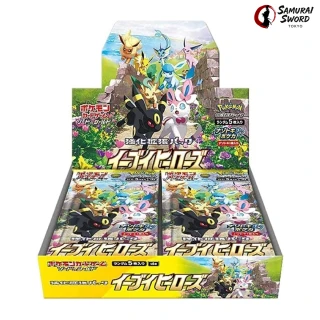
| S6A Eevee Heroes | ¥129,693 (~$842) | See the S6A card list |
| M6a 30th CELEBRATION | Sealed ¥27,202 (~$177); No Shrink ¥26,431 (~$172) | Both options listed |
| M6 Storm Emeralda (update: currently sold out — restock requests via Quick Order) | ¥10,246 (~$67) (update: currently sold out — restock requests via Quick Order) | Sealed option; the No Shrink option is sold out at the time of this update |
| OP-17 The World’s Strongest Warriors Damaged Box | Sold out at the time of this update | One Piece; both the regular OP-17 box and the OP-17 Damaged Box are sold out at the time of this update — restock requests go through Quick Order. See the OP-17 card list |
Two things in that table deserve a plain explanation, because a good supplier explains them rather than hiding them.
“No shrink” means the same unopened box without the clear factory film. Samurai Sword’s Quick Order page describes SEALED as the box with the clear factory film still around it and NO SHRINK as the same unopened box without that film, and its FAQ adds that every booster pack inside remains in its own factory seal. The two options are priced separately: for the M6a box the No Shrink option is listed below the Sealed option. A supplier who labels this clearly is being straight with you; one selling unshrinked boxes as “factory sealed” is not.
Separate Damaged Box products are products, not options. A Damaged Box has its own listing and its own price, and is not a variation of the sealed box. Read the product name (for example “Damaged Box”) before ordering, and compare suppliers on the same set, the same shrink status and the same week — nothing else is informative. For which boxes make sense to stock at current levels, see our best Japanese Pokemon booster boxes of 2026 ranking.
What a Good Supplier Relationship Gives You (That One-Off Orders Do Not)
The value of a standing supplier relationship is easy to underrate when every channel looks like a price list. Here is what the relationship actually buys you, in roughly the order shops come to appreciate it:
- Allocation on new sets. When a hyped set releases, Japanese domestic supply is allocated — and a supplier deciding who gets boxes on release week typically starts with repeat customers with order history. A shop that shows up as a stranger during a hype cycle buys at the back of the line; a shop with six months of history often does not. Samurai Sword’s contact page reserves its WhatsApp channel for “ASK prices, unavailable products, allocation requests, and qualifying large orders.”
- Consistent condition standards. One counterparty means one grading eye. You learn exactly what their “sealed”, “no shrink”, and packaging standards mean, and they learn what your customers will and will not accept. Across a marketplace of rotating sellers, you re-learn this — sometimes expensively — on every order.
- Tracked shipping as the default. A serious exporter ships internationally on tracked services (we use FedEx from Tokyo) and packs sealed boxes for transit as a matter of routine, because they answer for the box that arrives, not the box that left.
- Recourse. When something goes wrong — transit damage, a wrong item — a named business with published policies and a reputation to protect behaves differently from an anonymous seller. Check the policies exist in writing before you need them: damage claim requirements (unboxing videos are a common, reasonable ask) and clear terms on customs and duties.
- Market information. A supplier who moves Japanese product daily sees reprints, dry-ups, and street-price moves earlier than overseas trackers reflect them. Good ones share this, because a customer who buys well keeps buying.
None of these appear on a price-comparison screenshot; all of them show up in your margins over a year. If your model is resale — singles from boxes, sealed flipping, retail stocking — our guide to reselling Japanese Pokemon cards covers how sourcing quality feeds resale economics, and the PSA 10 reseller buying guide covers the graded side.
Red Flags and a Vetting Checklist
The gap between “official distributor” expectations and Japanese sourcing reality is exactly where bad actors operate — the buyer is looking for a door that does not exist, and someone offers to sell them a key. Before your first order with any supplier of Japanese product, run this checklist. All of it is ordinary due diligence; none of it requires special access.
Red flags
- Claims of official international wholesale authorization for Japanese-version Pokemon product. Given how the Japanese distribution structure works, treat this claim with heavy skepticism and ask for verifiable specifics.
- Prices far below the Japanese street market. Japanese sealed product has a visible domestic street price. A “wholesaler” offering chase sets dramatically under it is describing product that is fake, nonexistent, or not as described. There is no secret tier below the Japanese market.
- Payment only by methods with no recourse — crypto only, gift cards, or personal-account transfers to names that do not match the business.
- No verifiable business identity. A real Japanese company has a registration you can check, a physical address, and a consistent trading history. A supplier that exists only as a chat account does not clear the bar for a four-figure wire.
- No published policies. If damage claims, returns, and customs responsibility are not written down anywhere, then in a dispute they are whatever the seller says they are.
- Untracked shipping on sealed product, or vagueness about the carrier. International sealed shipments should travel tracked, full stop.
Vetting checklist for a new supplier
- Verify the company registration and physical address independently.
- Read the actual policy pages: damage claims (video requirements?), cancellations, customs/duties responsibility.
- Confirm shipping is tracked and which carrier is used.
- Check the payment methods and any processing fee before the first order.
- Place a small test order first and grade it honestly: communication speed, packaging quality, condition accuracy against listing, time to ship.
- Compare quotes against the visible Japanese street market, same set and shrink status — suspiciously low is a warning, not a win.
A supplier that passes all of this is worth more than one that beats them by a few percent on one quote and fails two checks. You are comparing expected cost per box including the orders that go wrong, not sticker price.
How We Work With Shops
Disclosure first: SAMURAI SWORD CO.,LTD. is itself an exporter-retailer of the kind in the channel table, so treat its terms as a worked example rather than neutral advice. Its live pages call it a Tokyo-based Japanese trading card retailer and an export-only business, and describe the store as B2B: “Listed prices are wholesale prices. Orders can be placed from one item.” Much of the volume is repeat overseas buyers, including card shops and resellers restocking on a cycle. The terms, concretely, as printed on the live pages on September 30, 2026:
- No minimum order. The shipping page states there is no minimum order amount or quantity, so a shop can place a one-box test order to grade us on the checklist above before committing to volume. We think that is how the first order should work.
- Quick Order for bulk. Our homepage has a Quick Order interface with tabs for Pokemon, One Piece, Yu-Gi-Oh and Dragon Ball, plus a DAMAGED BOX tab, and rows that show Product, Sealed and No Shrink columns — a spreadsheet-style flow rather than twenty add-to-cart clicks.
- Payment in JPY by Wise bank transfer, PayPal, credit or debit card through PayPal, or PayPal Pay Later where PayPal offers it. Wise carries no payment processing fee and is due within 3 days of the order; a 5% processing fee is added to the PayPal family and shown as its own line at checkout. Payments received via SWIFT incur a receiving fee of JPY 611. Prices are the Japanese-market prices, and the FX conversion happens on your side at your rate.
- FedEx from Tokyo (International Connect Plus for standard, International Priority for expedited), tracked on every order, with the cost calculated at checkout. Each order ships as its own parcel and separate orders cannot be combined; FedEx cannot deliver to P.O. Boxes.
- Published policies, including the unglamorous parts: a damage claim must be supported by a single, continuous, unedited video and reported within 7 days of receipt, and for business purchasers a two-video arrangement (an inspection video by the purchaser and a pack-opening video by the end customer) is accepted. Duties are included for the United States and US territories (DDP); every other country ships DAP, with duties and taxes payable on delivery where charged. We would rather you read that before ordering than discover it after.
- English plus nine other language versions (ten in total), support by email in English, and honest labeling — including the “no shrink” distinction explained earlier, priced separately from fully sealed stock.
- Beyond boxes: we also carry PSA10 graded singles for shops that stock a graded case alongside sealed.
Order Terms for Shops
| Term | What the live page prints |
|---|---|
| Coupons | Coupons and discounts are available from ¥30,000 in product subtotal; member coupons require registration or login |
| VIP desk | For a single order of ¥1,000,000 or more, message the VIP desk with what you want and how many; price-negotiation requests are answered only for orders of at least ¥1,000,000 |
| Business details | Company name, VAT / Tax ID, FedEx account number, EORI / importer ID and invoice notes are optional; logged-in customers can save them to a profile and reuse them on future Quick Order or cart sessions. Import duties, VAT, GST, customs fees and brokerage may still apply and are generally the buyer’s responsibility, except where DDP applies |
| Invoices | Signed-in customers can view, print or download the invoice from My Account |
| Cancellation | Only before the shipping date is confirmed, with a 10% fee (30% for pre-orders); a back order cannot be cancelled or changed once placed |
The business and customs details page explains why those optional fields exist. The home page widget prints “4.9/5 Rated by 786 verified buyers” as of September 30, 2026.
Us or another supplier, the advice stands: pick one or two counterparties, test them small, and build the history that gets you allocation when it matters.
Where to Buy
Boxes for a first order, currently listed as of October 6, 2026:
- SV2A Pokemon 151 box, Sealed option: ¥44,961 (~$292)
- S6A Eevee Heroes box: ¥129,693 (~$842)
- M6a 30th CELEBRATION box: Sealed option ¥27,202 (~$177), No Shrink option ¥26,431 (~$172)
The set listing pages show each set’s cards: S12A, SV2A, S6A and the card list hub. Sourcing requests for a specific card go through Quick Order. For repeat ordering, the wholesale walkthrough and the guide to buying PSA 10 cards in bulk cover the order flow and the graded side.
Frequently Asked Questions
Is there an official Japanese Pokemon card distributor for overseas shops?
In practice, no. Official distribution of Japanese-version Pokemon product serves Japanese domestic retail. Overseas shops overwhelmingly source Japanese product through Japanese exporters, retailers, marketplaces, and auction channels rather than through an official international wholesale program. Treat any claim of official international wholesale authorization for Japanese-version product with heavy skepticism.
How do I become a Pokemon distributor for Japanese cards?
For Japanese-version product, becoming a distributor is not really an application an overseas business can file, because the official channel is a domestic retail matter inside Japan. The realistic equivalent is a standing relationship with a reliable Japanese supplier: an exporter-retailer you order from repeatedly, which earns you allocation on new sets, consistent condition standards, and a counterparty with recourse.
Where do card shops actually buy Japanese Pokemon boxes?
Typically from a mix of three channels: Japanese exporter-retailers with international storefronts (the backbone for recurring volume), marketplace and proxy-buying channels (for gaps and small test orders), and Japanese auction or buyback channels (for opportunistic and out-of-print buys). Most experienced shop buyers anchor on one or two exporter relationships and use the other channels around them.
Is buying Japanese Pokemon product from an exporter cheaper than buying English product wholesale?
They are different economics rather than a like-for-like comparison. Japanese and English list prices are set separately, and buying at the Japanese source removes re-export middlemen. The honest comparison is landed cost per box, including payment fees, shipping and duties, against what your own customers will pay for Japanese product specifically, set by set.
What does “no shrink” mean on Japanese booster boxes?
Samurai Sword describes SEALED as the box with the clear factory film still around it, and NO SHRINK as the same unopened box without that film. The FAQ adds that every booster pack inside remains in its own factory seal. The two options are priced separately, so a supplier should label which one you are ordering.
How should I vet a Japanese card supplier before ordering?
Verify the company registration and address, read the published policies (damage claims, customs responsibility), confirm tracked shipping and the carrier, check payment methods and any processing fee, and place a small test order before committing volume. Be suspicious of prices far below the visible Japanese street market, because there is no secret tier below the Japanese domestic price.
What order terms does Samurai Sword offer shops?
Prices are wholesale and orders can start from one item, with no minimum order amount. For a single order of JPY 1,000,000 or more, the VIP desk takes a message with what you want and how many.
Store prices quoted are the prices currently listed on our own shelf as of October 6, 2026 (JST) and change with the Japanese market. Market-structure descriptions reflect how sourcing works in practice as of the time of writing; no statement here should be read as a claim about any specific third party’s programs or terms.
Picked for this article
📩 Get member-only sale alerts & coupons
Sale alerts, coupons and restock notices by email — straight from Tokyo.